
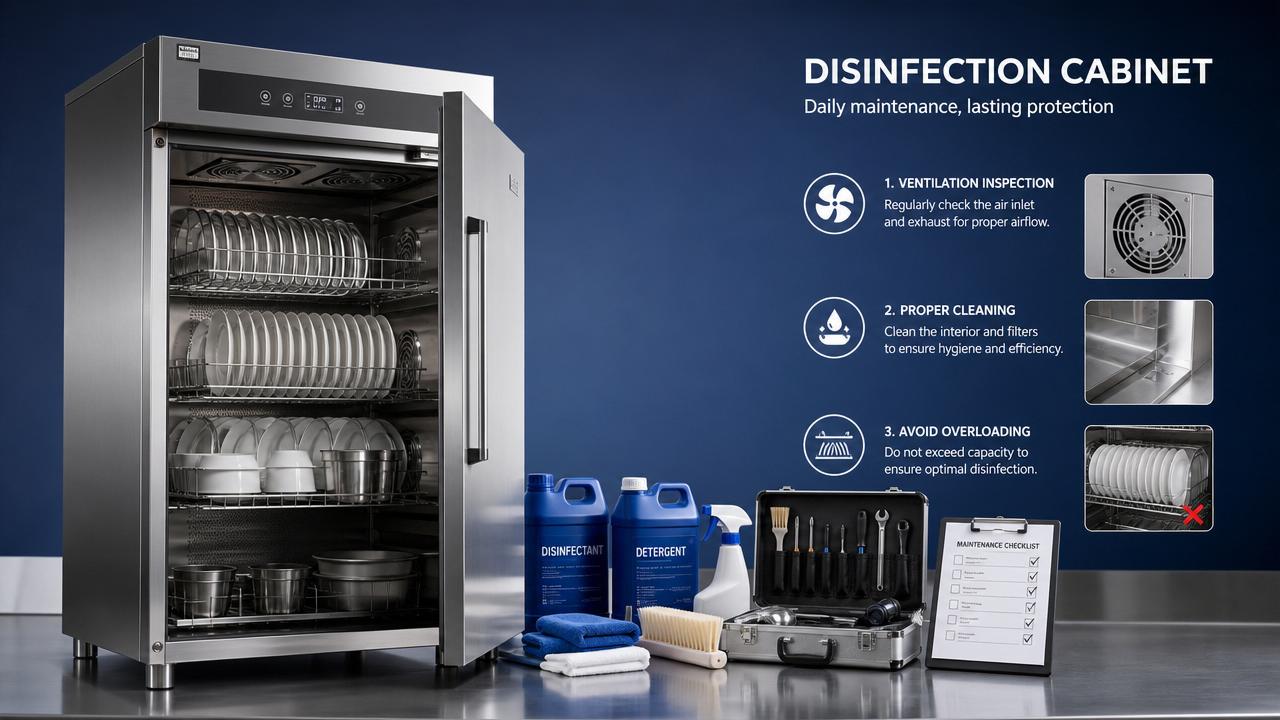
For after-sales maintenance teams, understanding the common mistakes that shorten the service life of a Disinfection Cabinet Series is essential to reducing failures, improving safety, and lowering repair costs. From improper cleaning methods to ventilation neglect and electrical misuse, small oversights can lead to serious performance issues. This article highlights the key problems technicians should watch for and the practical steps needed to keep equipment running reliably for longer.
Why a checklist approach works for Disinfection Cabinet Series maintenance
For kitchen equipment service teams, random troubleshooting often misses the real cause of early wear. A checklist helps technicians confirm the highest-risk items first: power quality, ventilation, loading habits, cleaning methods, door sealing, and heating or UV system condition. When a Disinfection Cabinet Series fails repeatedly, the issue is often not a defective part alone, but a usage pattern or maintenance mistake that keeps damaging the unit.
Using a structured inspection process also improves communication with operators. Instead of simply replacing components, after-sales staff can identify whether the cabinet is being overfilled, installed too close to walls, or exposed to moisture and unstable voltage. That reduces repeat visits and extends equipment life in busy commercial kitchens.
Core inspection checklist: mistakes that shorten service life
- Blocked ventilation: Airflow restrictions cause overheating, slower drying, and premature failure of electrical parts. Always check rear and side clearance.
- Incorrect cleaning chemicals: Corrosive cleaners can damage stainless steel surfaces, internal reflectors, seals, and control panels. Use only approved non-abrasive products.
- Water left inside the chamber: Standing moisture accelerates rust, weakens insulation, and affects sensors or lamps. Confirm proper drying after each cleaning cycle.
- Frequent overloading: Excess weight or tightly packed utensils reduces disinfection efficiency and stresses racks, hinges, and door alignment.
- Door misuse: Slamming the door or forcing closure on oversized items wears out hinges, locks, and sealing strips.
- Unstable power supply: Voltage fluctuation can damage controllers, heating elements, or UV-related components. Check grounding and recommend surge protection when needed.
- Poor installation location: Placing the cabinet near steam sources, fryers, or wet preparation zones increases contamination and electrical risk.
Quick judgment standards for service technicians
When servicing a Disinfection Cabinet Series, prioritize visible and measurable indicators. If internal surfaces show yellowing, warped seals, or repeated condensation, suspect overheating or cleaning misuse. If the chamber smells burnt or cycle times become inconsistent, inspect fan operation, wiring terminals, and temperature control parts. If users report that utensils remain wet or not fully disinfected, check loading density and airflow path before replacing major components.
Priority order during on-site inspection
- Confirm power input, grounding, and signs of electrical overheating.
- Inspect door seal, hinge movement, and closure alignment.
- Check ventilation space and internal airflow condition.
- Review cleaning routine with the operator.
- Assess rack loading habits and utensil placement.
- Test cycle performance before recommending part replacement.
Scenario-based reminders in commercial kitchen equipment service
Different sites create different risks. In restaurants with high wash volume, overloading and frequent door opening are common. In school or institutional kitchens, delayed cleaning may allow grease buildup to affect the Disinfection Cabinet Series. In new project installations, poor layout planning is a major cause of early service calls. During broader kitchen equipment coordination, some buyers also compare support planning across appliances such as Induction Cooker-Project Payment, making preventive maintenance documentation even more valuable for project handover.
Commonly overlooked risks
One overlooked mistake is treating surface cleanliness as proof of full maintenance. A cabinet may look clean while vents, terminals, and seals are already deteriorating. Another is replacing parts without correcting user behavior. If the operator continues to stack dripping utensils or uses harsh chemicals, the same failure will return. Maintenance teams should also document ambient temperature, humidity, and nearby heat sources, especially in compact kitchen equipment layouts.
Practical actions to extend service life
Create a simple service form for every Disinfection Cabinet Series visit. Record installation environment, voltage condition, seal status, cleaning products used, and loading pattern. Train users to dry utensils before loading, leave proper ventilation clearance, and report abnormal noise or odor early. Recommend scheduled inspection instead of failure-only repair. If a site is expanding its kitchen equipment plan or reviewing payment and delivery arrangements for related products such as Induction Cooker-Project Payment, it is also a good time to confirm maintenance access, spare parts planning, and operator training requirements.
Next-step communication checklist
If you need to improve reliability and reduce repeat repairs, first confirm these points with the customer: actual daily load, installation clearance, power stability, cleaning method, failure history, and replacement cycle expectations. For after-sales teams, this checklist-based approach makes Disinfection Cabinet Series maintenance more accurate, more preventive, and more cost-effective over the long term.
Send Us A Message