
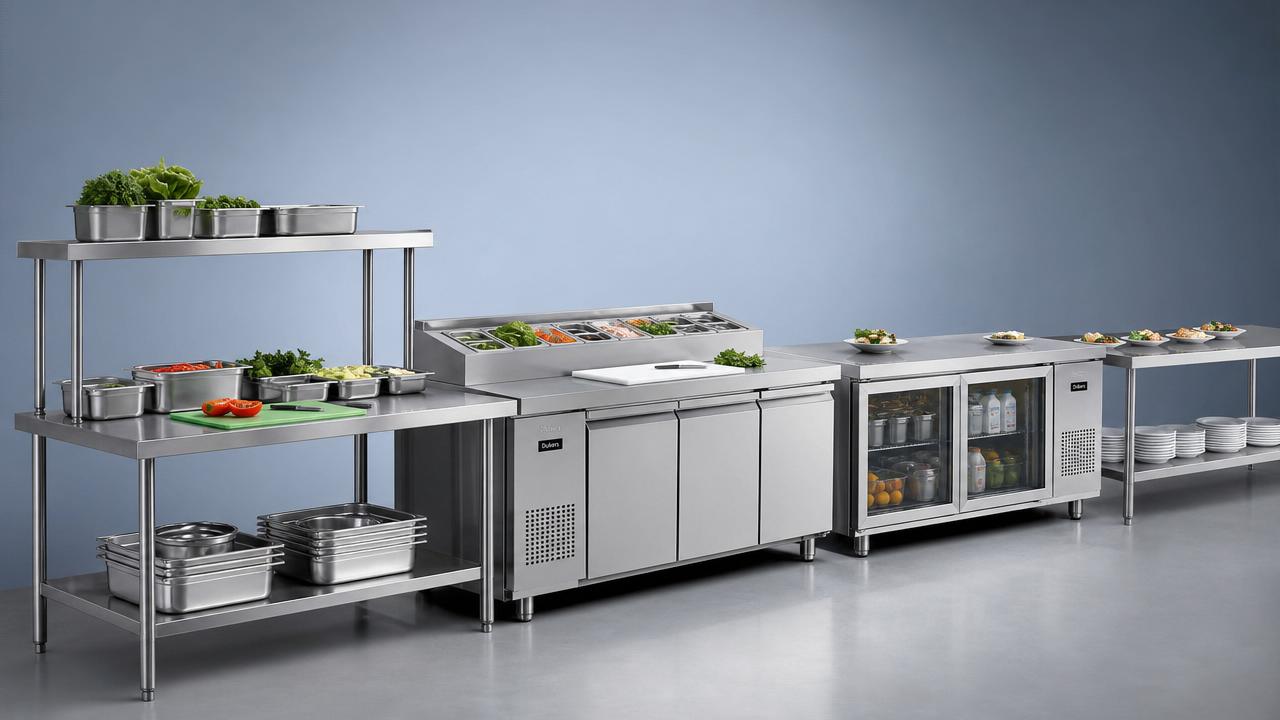
In busy prep rooms, the right commercial workbench can make the difference between smooth workflow and constant delays. Choosing proper workbench sizes helps operators reduce congestion, improve movement, and keep tools and ingredients within easy reach. This guide explores how smart sizing decisions can solve prep room bottlenecks and support more efficient daily kitchen operations.
A commercial workbench solves bottlenecks best when its size matches the actual task, traffic flow, and storage needs of the prep team. For operators, the problem is rarely just “not enough table space.” More often, delays happen because benches are too deep to reach across comfortably, too long for the aisle width, or too small to hold ingredients, tools, and trays without constant repositioning.
If prep staff need to turn, step aside, or share one crowded surface every few seconds, the workbench is slowing the room down. The most effective sizing choice is one that supports the sequence of work: receiving ingredients, washing, cutting, portioning, assembling, and holding items for the next step.
What operators actually need from a commercial workbench
Most users care about practical issues: enough usable surface area, easy reach, safe movement, and fewer interruptions. A bench may look large on paper, but if it blocks access to refrigerators, sinks, or shelving, it creates more problems than it solves. Operators need a work surface that fits the room and the pace of service.
Height also matters. A bench that is too low causes fatigue during long prep shifts, while one that is too high makes knife work and mixing uncomfortable. In most prep environments, the right size is not just about width and depth. It is about how the bench supports repeated motions over hours of work.
How to choose the right workbench size for prep flow
Start with the task, not the catalog dimensions. A vegetable prep station usually needs enough width for cutting boards, containers, and waste handling, while a sandwich or assembly station may require room for ingredient pans and finished items. Measure what staff place on the surface during peak periods, then add working space rather than guessing.
Depth should allow staff to reach tools and ingredients without leaning. Very deep benches often waste back-edge space or become clutter zones. Width should support output without forcing shared stations to become crowded. If two people work side by side, each person needs clear personal space, not just a mathematically shared tabletop.
Aisle clearance is just as important. Even a well-sized commercial workbench becomes a bottleneck if carts, bins, or passing staff cannot move around it easily. Before buying, map the bench location with tape on the floor and test movement during normal prep routines.
Common sizing mistakes that create prep room bottlenecks
One common mistake is choosing the largest possible bench to “maximize capacity.” In small prep rooms, oversized units often reduce speed because they limit circulation. Another mistake is underestimating storage needs below or beside the bench. When ingredients or tools have no dedicated place, operators stack items on the work surface and lose effective workspace.
Some kitchens also treat all stations the same. But meat trimming, pastry prep, packaging, and cold assembly all use space differently. Matching one standard bench size to every process often leads to crowding in one area and wasted space in another.
Cold holding can also affect sizing decisions. In stations that need chilled ingredients close at hand, a model like a Glass Door Workbench may help combine prep space and undercounter access, reducing extra steps between a separate fridge and the bench.
Best workbench setups for smoother daily operation
A good setup places the commercial workbench where items enter and leave the station naturally. Ingredients should arrive from one side, be processed on the surface, and move out without crossing back through the same path. This reduces collisions, waiting, and unnecessary walking.
For single-operator stations, compact benches with nearby storage often work better than oversized surfaces. For team prep, dividing functions across multiple correctly sized benches can be faster than forcing several people onto one long table. The goal is smoother handoff between tasks, not simply more steel surface.
It is also worth considering visibility and access. In some kitchens, underbench refrigerated storage improves efficiency because staff can see and grab items quickly. In those cases, a second Glass Door Workbench should only be considered if it truly reduces trips and does not tighten aisle space.
A simple checklist before you decide
Before selecting a bench, ask these questions: How many people use it at once? What items must stay on the surface during peak prep? How much aisle space remains when doors, bins, and carts are in use? Does the bench reduce steps, or does it just add surface area? Can staff reach everything safely and comfortably?
If possible, observe a full prep cycle and note where delays happen. In many kitchens, the bottleneck is not production skill but poor station sizing. A better-fitting commercial workbench can improve speed, comfort, and consistency without changing the whole room layout.
Conclusion
The best commercial workbench size is the one that supports real movement, real tasks, and real operator habits. When the bench fits the workflow, prep rooms feel less crowded, staff work with fewer interruptions, and daily output becomes more reliable. Instead of choosing the biggest unit available, focus on the dimensions that remove friction from the job. That is what truly solves prep room bottlenecks.
Send Us A Message