
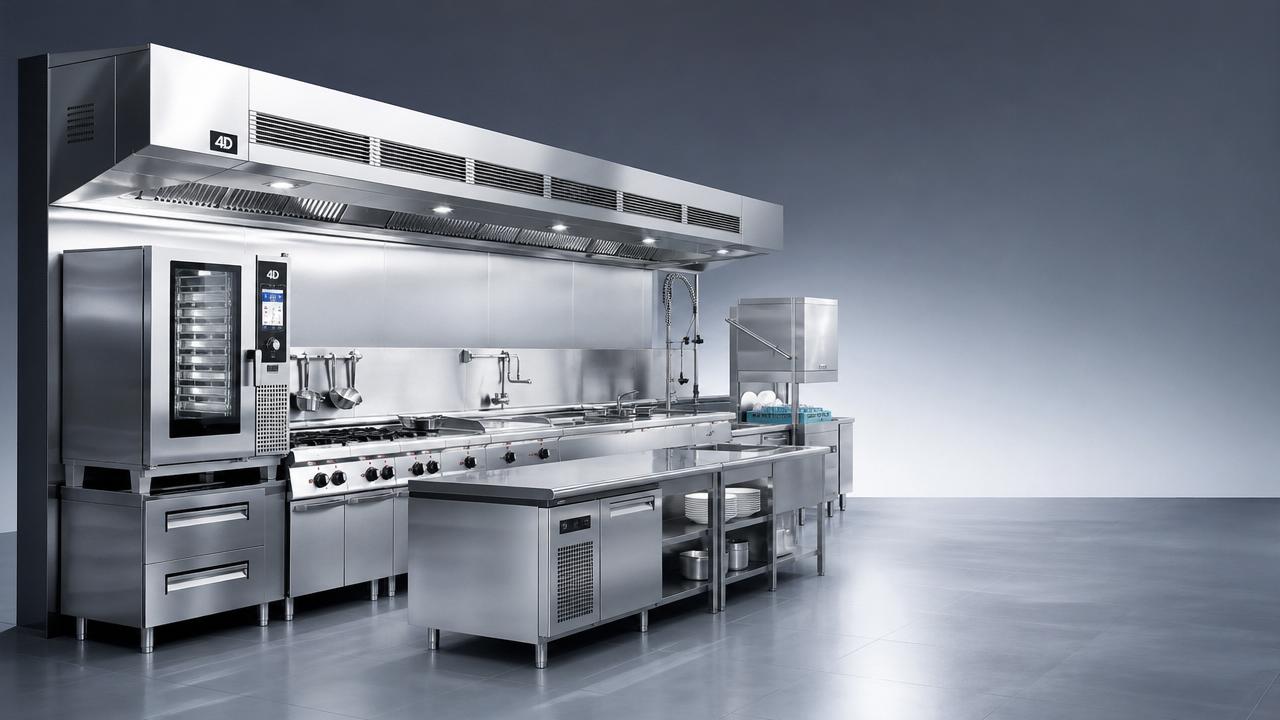
When evaluating kitchen solutions for new builds, project leaders need more than attractive design—they need reliability, efficiency, and long-term value. The 4D Kitchen Series has gained attention for its practical features and project-friendly adaptability, making it a relevant option for modern commercial developments. But is the 4D Kitchen Series truly worth integrating into upcoming projects? This article explores the key factors decision-makers should consider before planning it into their next installation.
For project managers and engineering leads, the answer depends less on appearance and more on fit: fit for workflow, fit for utility capacity, fit for handover schedules, and fit for long-term maintenance. In commercial kitchens, even a 5% mismatch in layout or output capacity can create years of inefficiency. That is why early-stage equipment evaluation should focus on operational practicality, installation flexibility, and lifecycle cost rather than short-term procurement price alone.
Why the 4D Kitchen Series attracts attention in new commercial projects
The 4D Kitchen Series is often considered because it aligns with the core demands of modern kitchen planning: modularity, easier coordination with MEP systems, and adaptability across multiple service formats. In projects such as hotel kitchens, canteens, food courts, and seafood restaurants, teams usually need equipment layouts that can support 2 to 4 service peaks per day while keeping cleaning, ventilation, and staff circulation manageable.
Key strengths project teams usually evaluate
- Modular planning that simplifies phased installation across 3 common stages: rough-in, equipment placement, and commissioning
- Layout flexibility for linear, island, or zone-based kitchen configurations
- Potential reduction in rework when utility points are defined early within a tolerance range such as ±50 mm
- Operational suitability for medium to high-volume food preparation environments
What this means in practice
A project-friendly kitchen system should not force the civil, HVAC, electrical, and drainage teams into repeated changes. If the 4D Kitchen Series supports clearer zoning for hot line, prep, wash-up, and pass areas, it can shorten coordination cycles by 1 to 2 review rounds. For projects operating under 8- to 16-week fit-out schedules, that time saving matters.
The table below shows a practical framework for assessing whether the 4D Kitchen Series matches a new-build project instead of being selected only on visual appeal.
The key takeaway is that the 4D Kitchen Series becomes more valuable when it improves coordination and daily operation at the same time. If it only looks modern but does not ease utilities, maintenance, and staff flow, it may not justify inclusion in a new project plan.
How to judge whether the 4D Kitchen Series is worth the investment
A sound decision should compare capital cost with service life, installation complexity, and output efficiency. In many commercial kitchen projects, the better question is not “Is the unit cheaper?” but “Will it reduce operating friction over the next 36 to 60 months?” The 4D Kitchen Series is worth planning when it supports smoother production, cleaning discipline, and lower disruption during maintenance windows.
Four decision criteria for project leaders
- Does it match expected meal volume, such as 100 to 500 covers per service period?
- Can site utilities handle the load without major redesign or added infrastructure?
- Is the maintenance routine realistic for weekly, monthly, and quarterly service cycles?
- Will the layout remain useful if the menu mix or tenant requirements change within 2 to 3 years?
Related equipment planning matters too
The 4D Kitchen Series should never be evaluated in isolation. Heat line equipment, steam generation, ventilation balance, and product specialization all affect the final kitchen result. For example, seafood-focused projects may also review dedicated steaming solutions such as the Electromagnetic Seafood Steamer when planning a complete production line, especially where energy control and menu consistency are priorities.
Before approving the equipment plan, many project teams use a comparison matrix like the one below to reduce procurement bias and keep technical review grounded in measurable criteria.
This kind of matrix helps determine whether the 4D Kitchen Series can deliver practical value beyond purchase price. A well-selected system should support installation control, serviceability, and operating consistency from day one.
Implementation risks, common mistakes, and planning advice
Even a suitable kitchen system can underperform if planning is rushed. One common mistake is approving the 4D Kitchen Series before confirming extraction volume, water supply routes, and cleaning workflow. Another is using generic kitchen templates for projects with specialized menus. In seafood, institutional catering, or mixed-service developments, output rhythm and sanitation routines can differ by 20% to 30% from standard assumptions.
Risk control checklist before final approval
- Verify utility drawings against final equipment positions at least 1 round before procurement lock
- Confirm spare parts and service response expectations for the first 12 months
- Review cleaning access for corners, undershelves, and hot-zone surfaces
- Align acceptance criteria across contractor, consultant, and end-user operations teams
Practical recommendation
If your project requires a kitchen solution that balances adaptability, operational logic, and maintainability, the 4D Kitchen Series can be worth planning into new builds. Its value is strongest when it is integrated early, reviewed against real production needs, and matched with complementary equipment where necessary. Project leaders should request a layout-based evaluation, utility review, and lifecycle maintenance discussion before making a final decision.
For project managers overseeing commercial kitchen development, the best next step is to move from product interest to technical validation. Ask for a tailored kitchen plan, compare installation requirements, and review how the 4D Kitchen Series fits your service model. To refine your equipment strategy or explore specialized solutions, including the Electromagnetic Seafood Steamer, get a customized proposal and consult product details before locking your next project specification.
Send Us A Message