
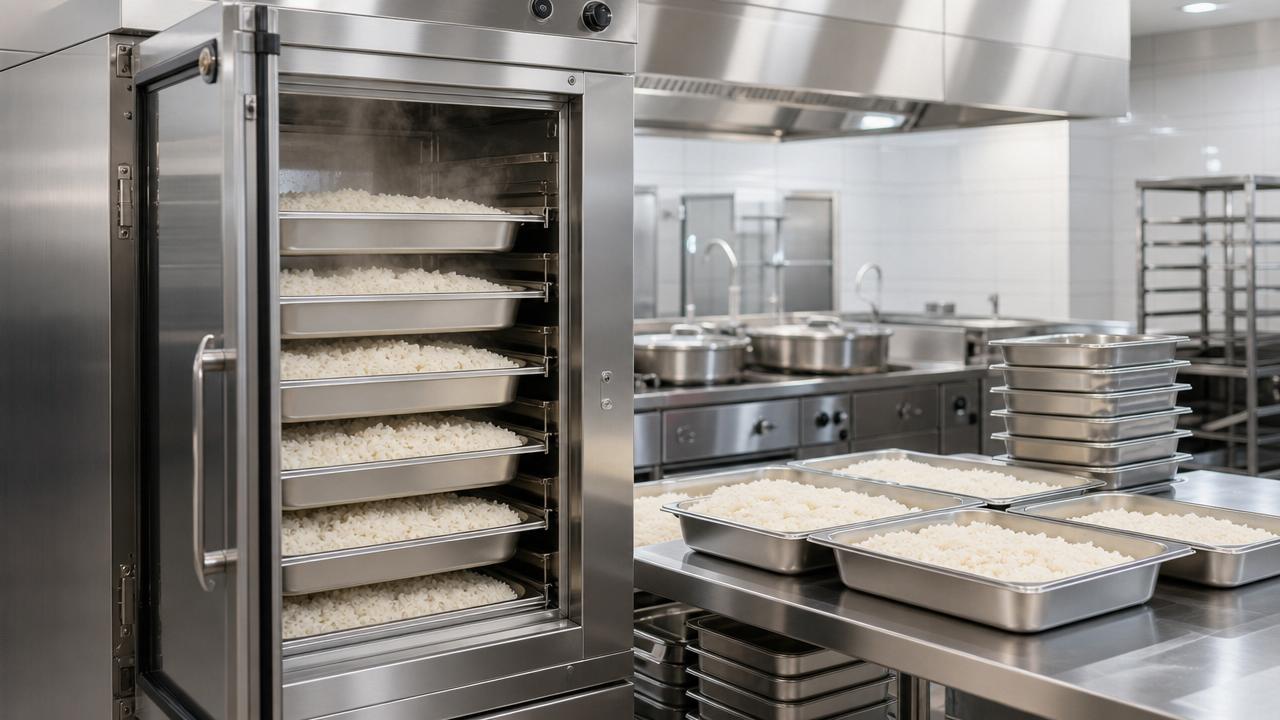
When evaluating kitchen equipment budgets, the hidden cost of underperforming capacity is often overlooked. In the Steamed Rice Cabinet Series, capacity gaps can slow batch output, increase labor dependency, and create avoidable operating expenses over time. For financial decision-makers, understanding how these gaps affect staffing efficiency and total cost of ownership is essential before approving any purchase.
Understanding capacity gaps in the Steamed Rice Cabinet Series
In commercial kitchen equipment, a capacity gap appears when actual output cannot match service demand, peak-hour volume, or production scheduling. For the Steamed Rice Cabinet Series, this usually means fewer trays per cycle, longer recovery time between batches, or inconsistent steaming performance under heavy use. While these limits may look minor during product review, they often create measurable labor costs once the equipment enters daily operation.
This matters because labor is not only a wage line. It also includes overtime, shift overlap, rework, waiting time, and supervisory effort. A cabinet that cannot keep pace with meal periods may force staff to start earlier, stay later, or divide production into more cycles than planned. For finance approvers, that turns a lower purchase price into a higher operating burden.
Why the industry pays close attention
In the kitchen equipment sector, operators are under pressure to improve throughput without expanding headcount. Central kitchens, canteens, school dining halls, hospitals, and chain restaurants all depend on predictable batch output. The Steamed Rice Cabinet Series is therefore not just a cooking asset; it is a production asset tied directly to labor scheduling, food holding time, and service speed.
Capacity shortfalls are especially costly in high-volume environments where a delay in one station affects the entire line. A steaming bottleneck can slow packing, holding, dispatch, and front-of-house timing. In budget terms, the issue is operational continuity, not only equipment specification.
Operational impact by kitchen scenario
The business effect of the Steamed Rice Cabinet Series varies by kitchen type, but the financial pattern is similar: insufficient capacity increases manual intervention and weakens labor productivity.
Business value of accurate capacity evaluation
For financial reviewers, the right question is not whether the Steamed Rice Cabinet Series can produce steamed rice, but whether it can do so at the required volume with minimal labor friction. A properly sized unit supports batch consistency, reduces idle time around the line, and improves labor planning. It also lowers the risk of unplanned second shifts or temporary staffing during demand surges.
In some operations, comparing adjacent equipment categories can also reveal process optimization opportunities. For example, an open-production concept may benefit from complementary solutions such as Electric Open Kitchen-Electric Rice Noodle Roll Maker, especially when menu diversity and front-line visibility are part of the operating model.
Practical evaluation points before approval
Before approving a Steamed Rice Cabinet Series investment, finance teams should request more than rated capacity figures. Review actual batch yield, cycle duration under full load, recovery time, utility consumption, and staffing assumptions. Ask whether output data reflects real kitchen conditions or ideal test conditions. Also examine how the unit performs during back-to-back meal periods, since that is where labor costs often escalate.
A useful approval framework includes four checkpoints: expected meals per hour, required labor hours per shift, tolerance for peak demand, and long-term maintenance impact on uptime. When these factors align, equipment selection becomes a cost-control decision rather than a simple capital expense review.
A more reliable way to control total cost
The Steamed Rice Cabinet Series should be evaluated as part of labor efficiency strategy, not only as a kitchen equipment line item. Small capacity gaps can create recurring staffing pressure, while accurate sizing supports stable output and better financial performance. For approvers focused on total cost of ownership, the strongest decision is usually the one that prevents hidden labor expansion before it starts. If operational volume is rising or service windows are tightening, now is the right time to validate capacity assumptions in detail.
Send Us A Message